Guides

Diamond Cuts & Shapes Explained

Two words people use interchangeably

Almost everyone says "cut" when they mean "shape." It's worth separating them, because only one of the two is a measure of quality.

Shape is the silhouette — round, oval, emerald, pear. It's a matter of taste, and no shape is better than another. Cut is how precisely the stone was faceted: the angles, the proportions, the symmetry, the polish. Cut is the single biggest factor in whether a diamond looks alive. A beautifully cut one-carat stone will outshine a poorly cut one-and-a-half every time, and it will do it across the room.

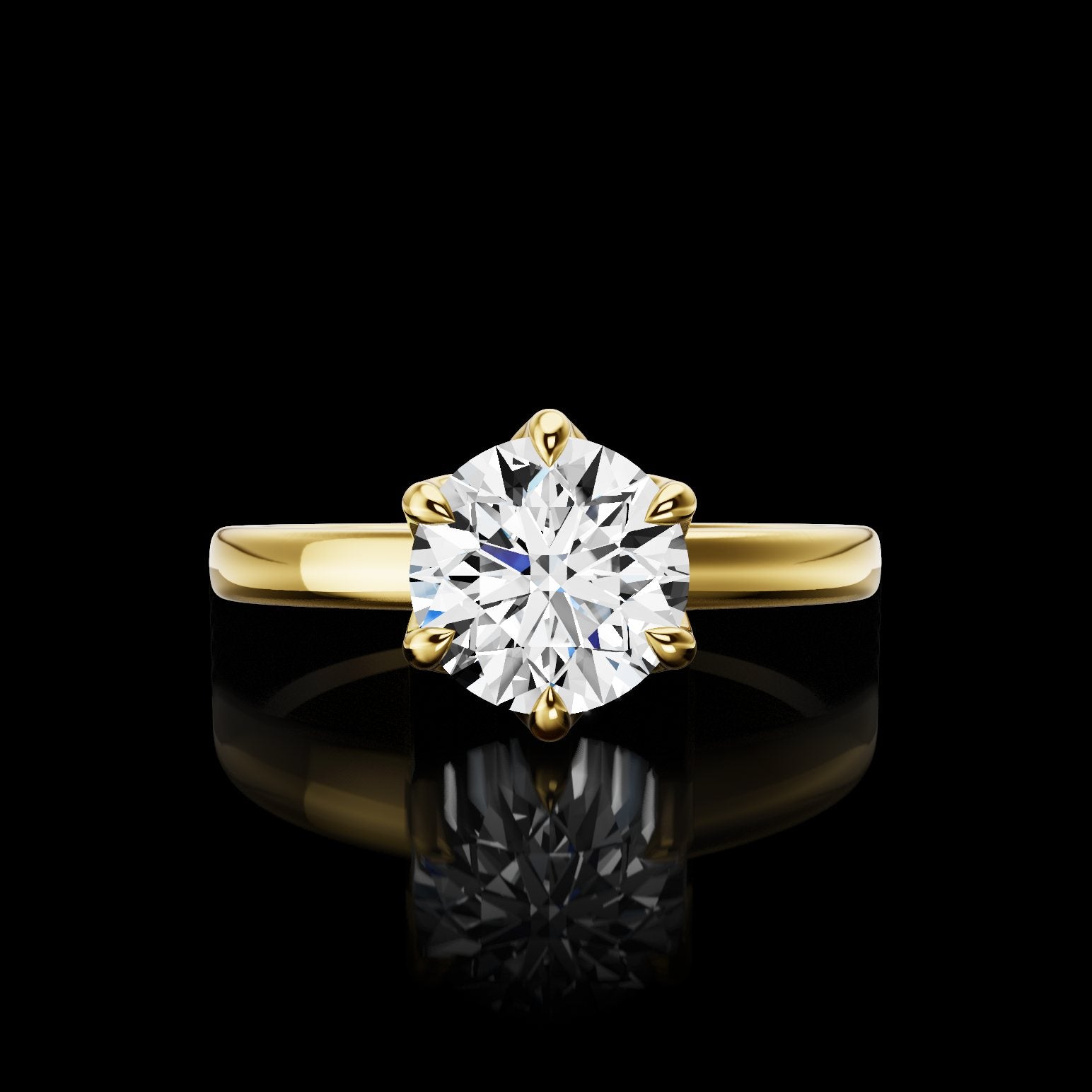
A round brilliant diamond in a six-prong yellow gold solitaire setting
Round brilliant · yellow gold solitaire

The round brilliant

Fifty-seven facets engineered over a century for one purpose: to return as much light to your eye as possible. Nothing sparkles harder, and nothing hides a lower colour grade more forgivingly. It is the most popular shape in the world for good reason.

It is also the most forgiving to wear. With no points or corners to catch, a round sits comfortably in almost any setting — which is why it suits hands that never come out of motion.

In the collection: Round Brilliant Lab Diamond Stud Earrings.
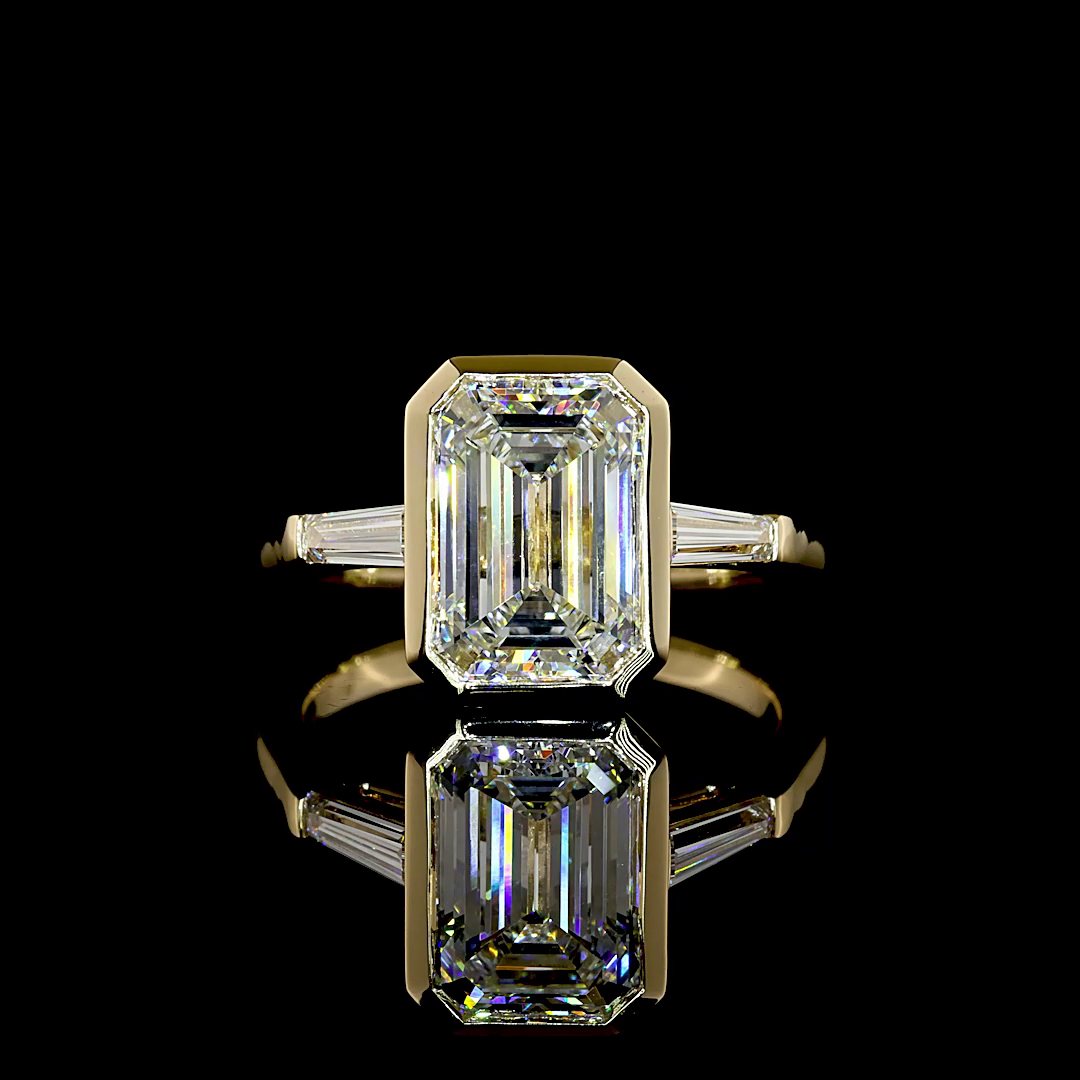
A bezel-set emerald-cut diamond with tapered baguette side stones in yellow gold
Emerald cut · bezel set in yellow gold

The emerald cut

A step cut, not a brilliant — long parallel facets instead of tiny triangular ones. Rather than scattering light into sparkle, it moves it in broad flashes, the effect jewellers call the hall of mirrors. Quiet, architectural, unmistakably Art Deco.

Because those open facets act like windows, an emerald cut shows inclusions more readily than a brilliant does. We'd steer you a grade or two higher on clarity here than we would on a round. In return you get a shape whose long, open outline reads elegant and unhurried on the hand.

In the collection: Bezel-Set Emerald Lab Solitaire Ring.

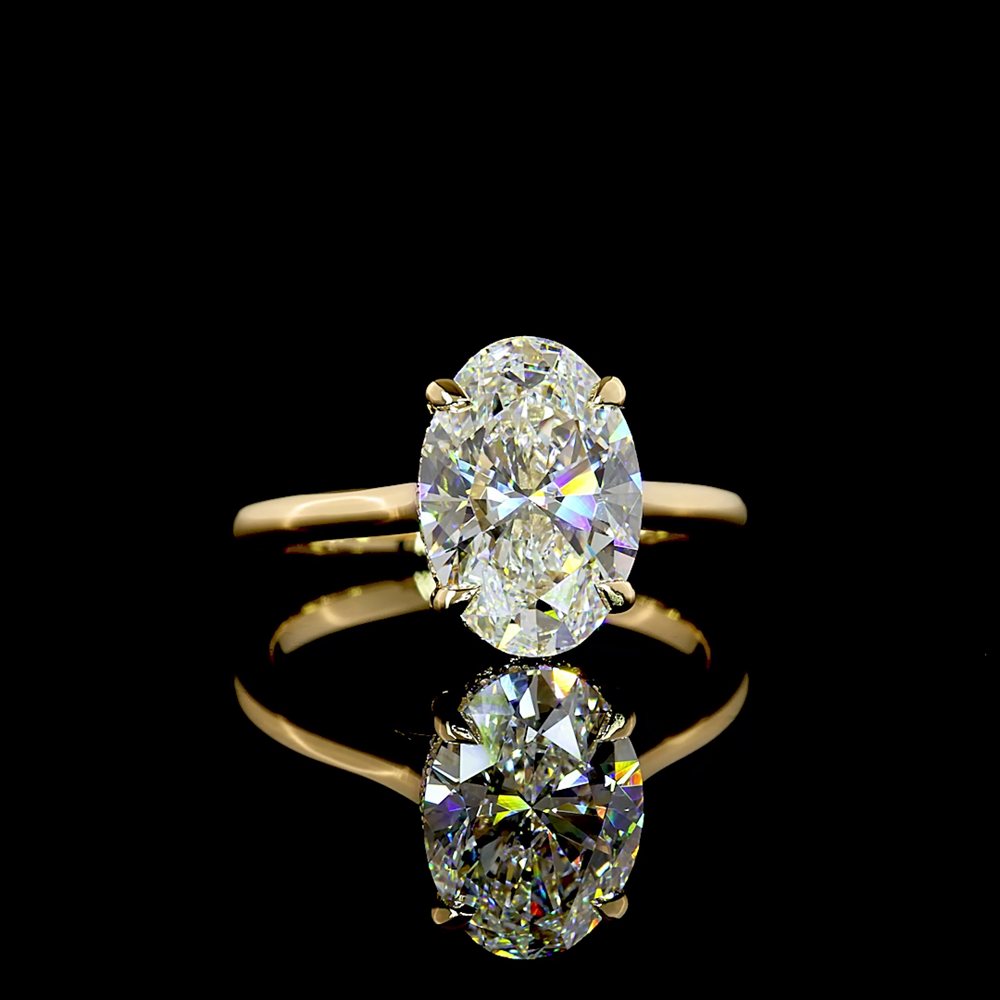
An oval brilliant diamond in a slim yellow gold solitaire setting
Oval brilliant · yellow gold solitaire

The oval

A brilliant cut stretched long. It keeps nearly all of the round's fire while covering more finger per carat, so it looks larger than its weight — and it lengthens the hand, which is why it has become the most requested alternative to a round.

Watch for the bow-tie: a dark band across the centre that appears in poorly proportioned ovals. Every oval has one to some degree; a well-cut stone shows almost none. It is the first thing we look for when we source one.

In the collection: East West Oval Diamond Pendant.

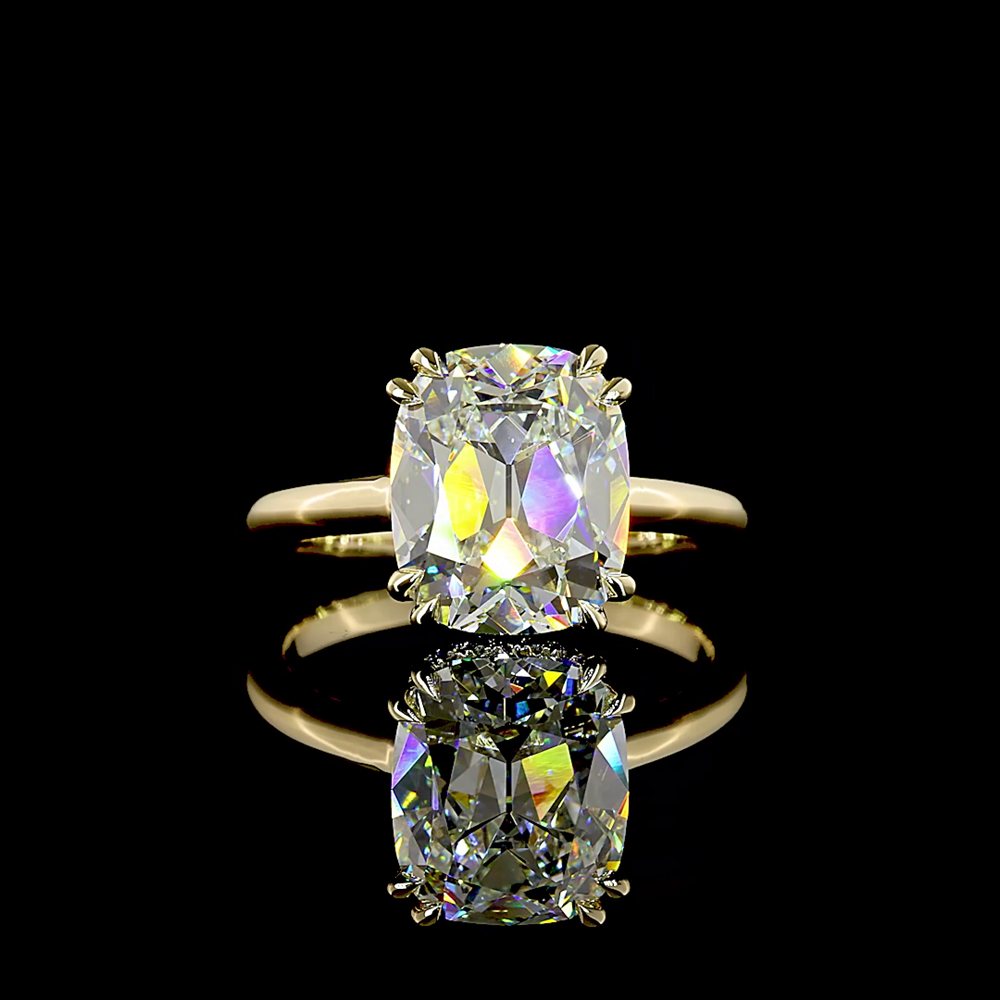
An elongated cushion-cut diamond in a four-prong yellow gold solitaire setting
Cushion cut · yellow gold solitaire

The cushion

A soft-cornered square with larger facets than a round, giving a romantic, candlelit sparkle rather than a crisp one. It is the shape that most often reads as antique — it descends directly from the old mine cuts of the nineteenth century.

Cushions come square or elongated, and the difference is bigger than people expect. An elongated cushion wears much closer to an oval; a square one is softer and more classical.

In the collection: Antique Cushion Cut Lab Diamond Eternity Band.

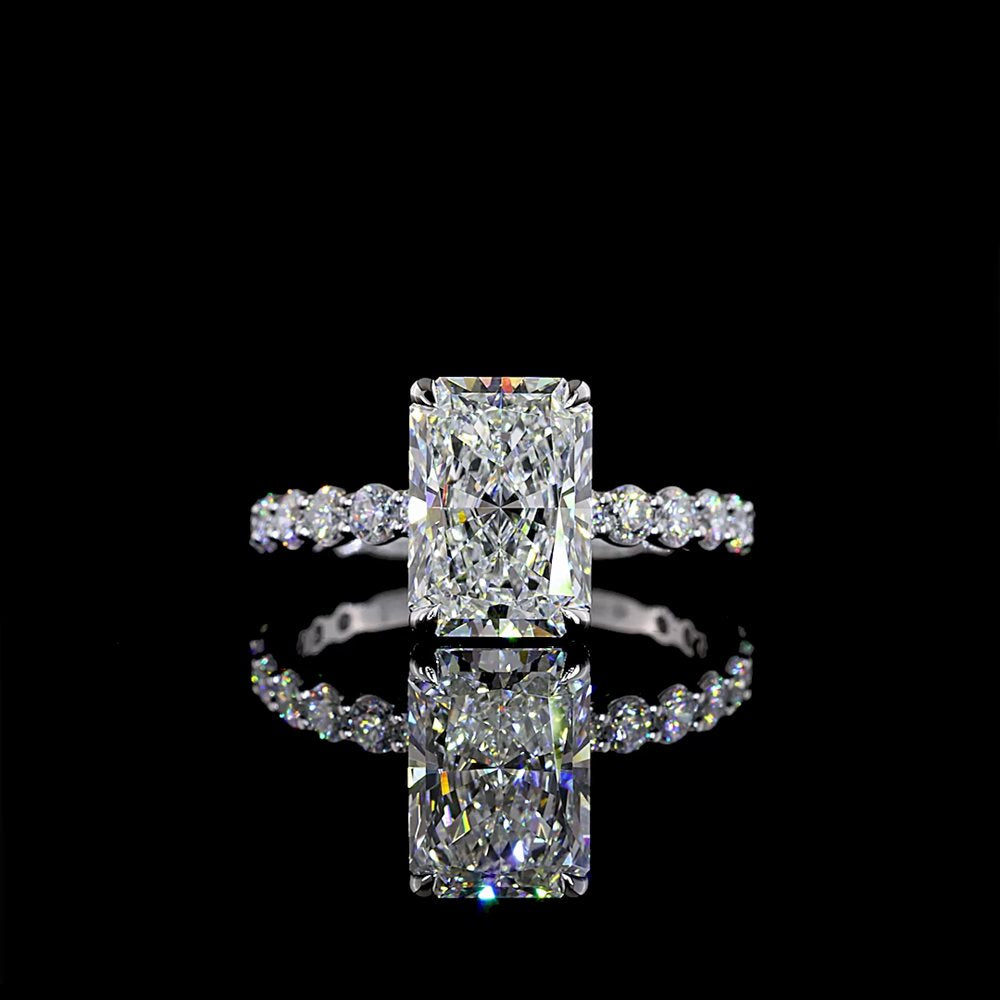
An elongated radiant-cut diamond on a white gold band set with round pavé diamonds
Radiant cut · white gold with pavé

The radiant

The compromise that ends most debates: an emerald cut's rectangular outline with brilliant faceting underneath. If you love the long silhouette but want fire rather than flashes, this is your shape.

It also hides inclusions and colour far better than a true emerald cut, so the stone stays lively without needing a flawless clarity grade to look its best.

In the collection: Radiant Lab Diamond Split Shank Solitaire Engagement Ring.

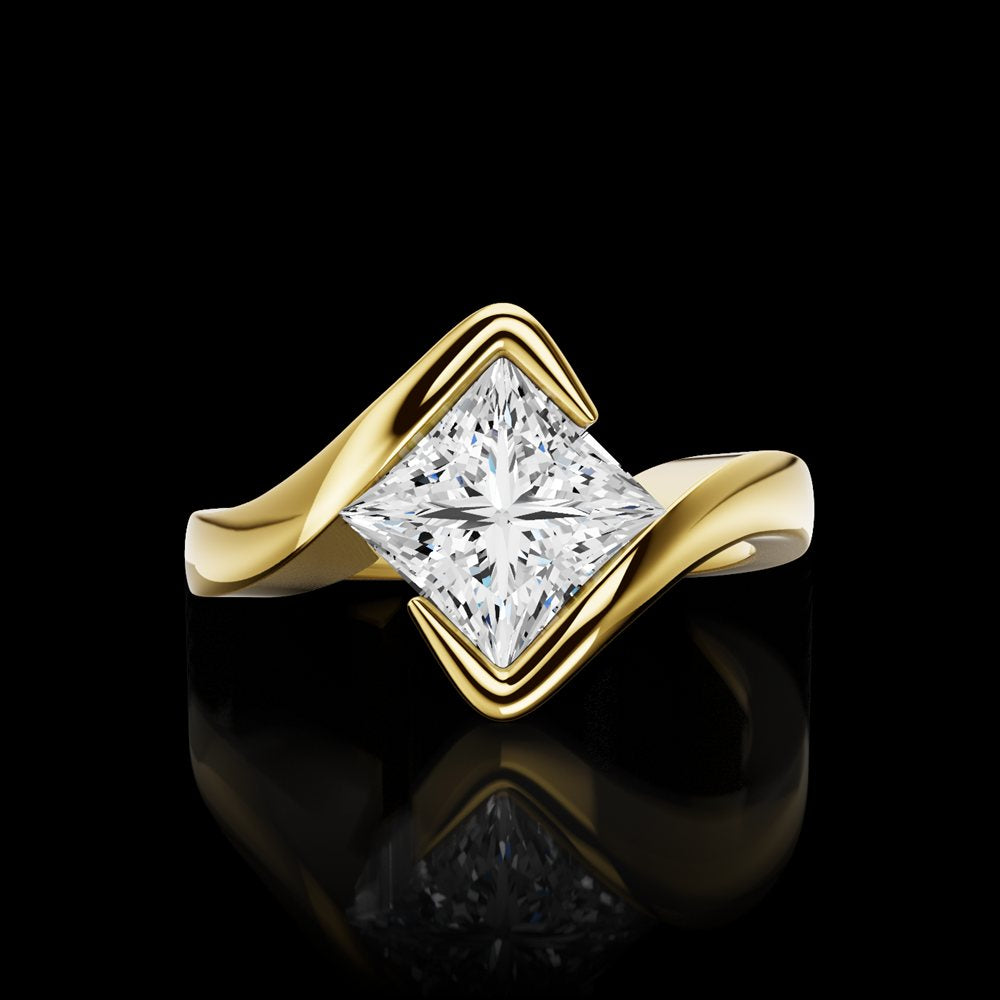
A princess-cut diamond set on point in a sculptural yellow gold bypass setting
Princess cut · yellow gold bypass setting

The princess

A square brilliant with sharp, uncompromising corners — modern, geometric, and full of fire. It reads crisper and more architectural than a round without giving up sparkle, which is what draws people to it.

Those corners are the stone's most vulnerable point. A princess wants a setting that shields them — prongs that cup each corner, a bezel, or a design like this one where the metal wraps the stone entirely.

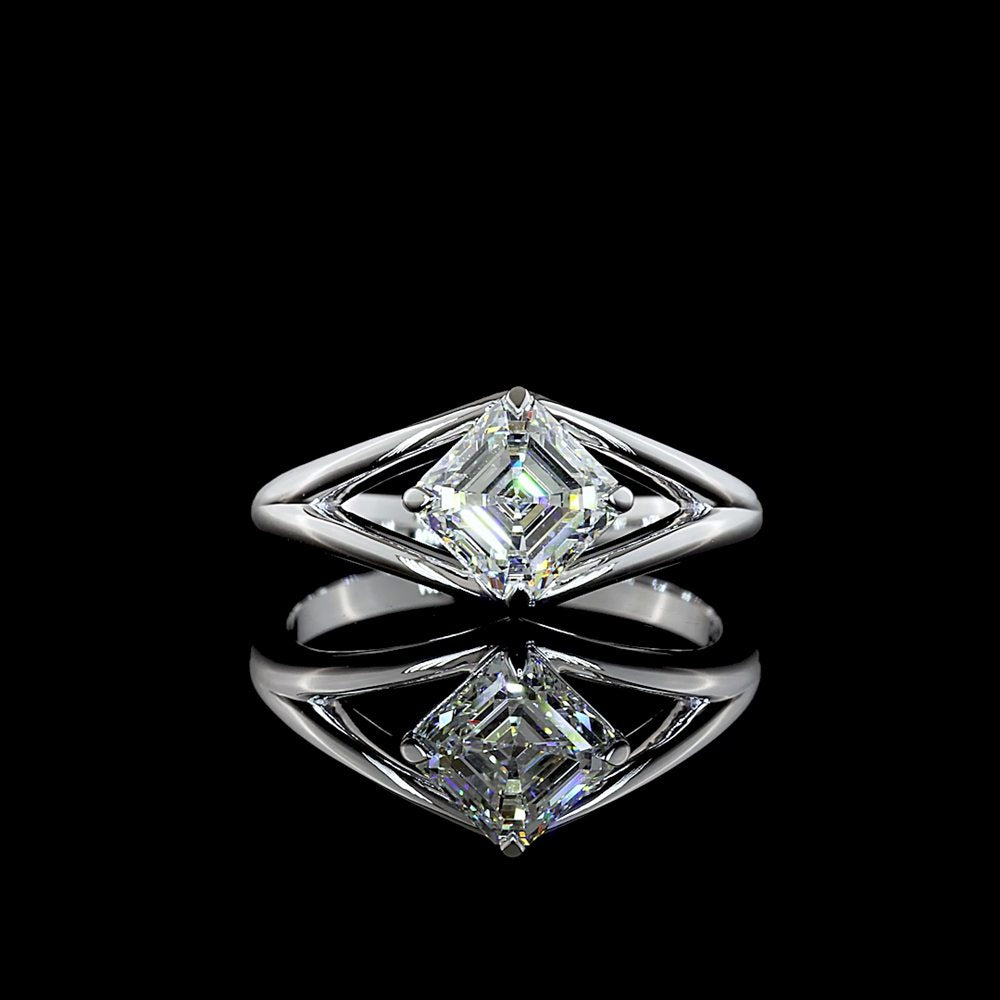
An Asscher-cut diamond set on point in a split-shank platinum ring
Asscher cut · platinum split shank

The asscher

A square step cut with cropped corners and deep concentric facets that draw the eye straight down into the stone. The most distinctly Art Deco shape there is, and the one people either fall for immediately or not at all.

The same clarity advice applies as for the emerald cut — those open steps show everything. Set on point, as here, it reads more contemporary than its history suggests.

In the collection: Channel-Set Asscher Lab Diamond Bangle.

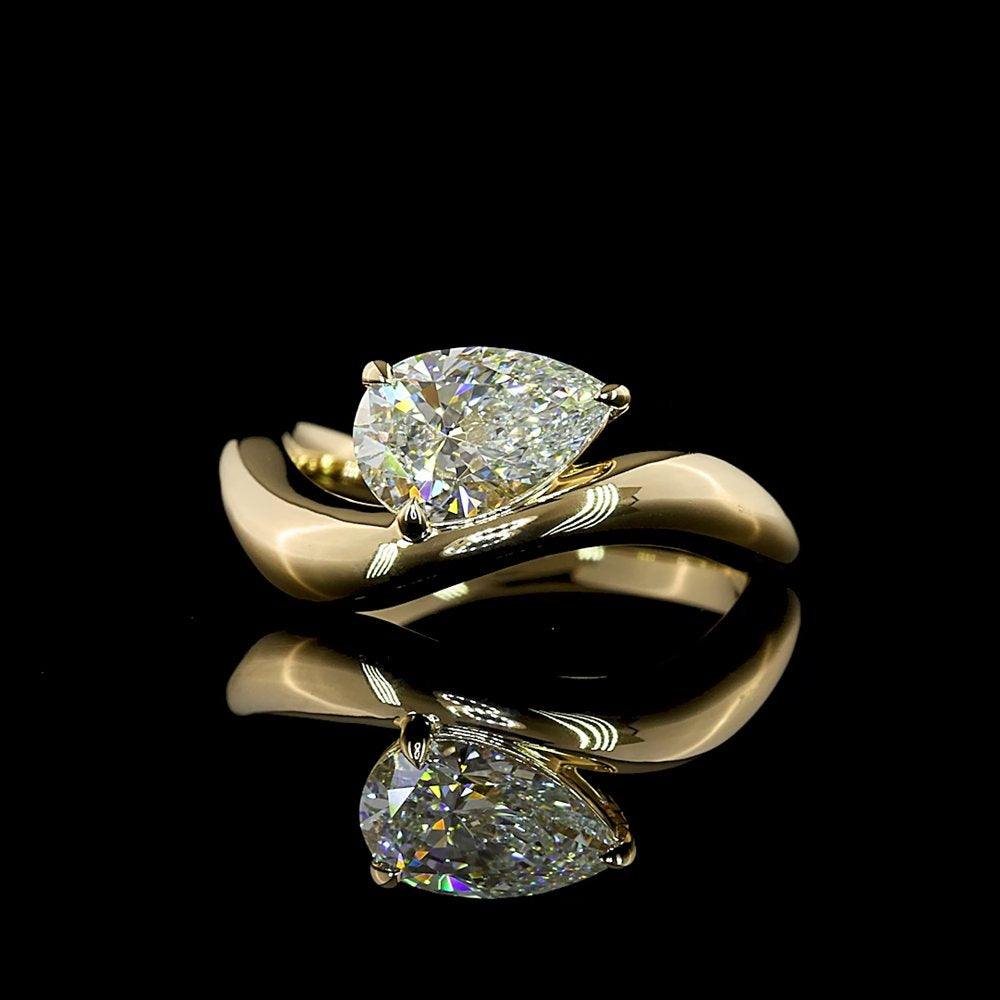
A pear-shaped diamond set east-west in a sculptural yellow gold bypass ring
Pear cut · yellow gold bypass setting

The pear

A brilliant round on one end drawn to a point at the other — elongating, a little unexpected, and requested more each year. Worn the traditional way, with the point toward the fingertip, it lengthens the hand as effectively as an oval.

Symmetry is everything here. The point must line up dead centre with the round end, and the two shoulders must mirror each other; any wobble is visible forever. Like the oval, a pear can show a bow-tie, and the point wants a prong over it.

In the collection: Chunky Bezel Pear Earring.

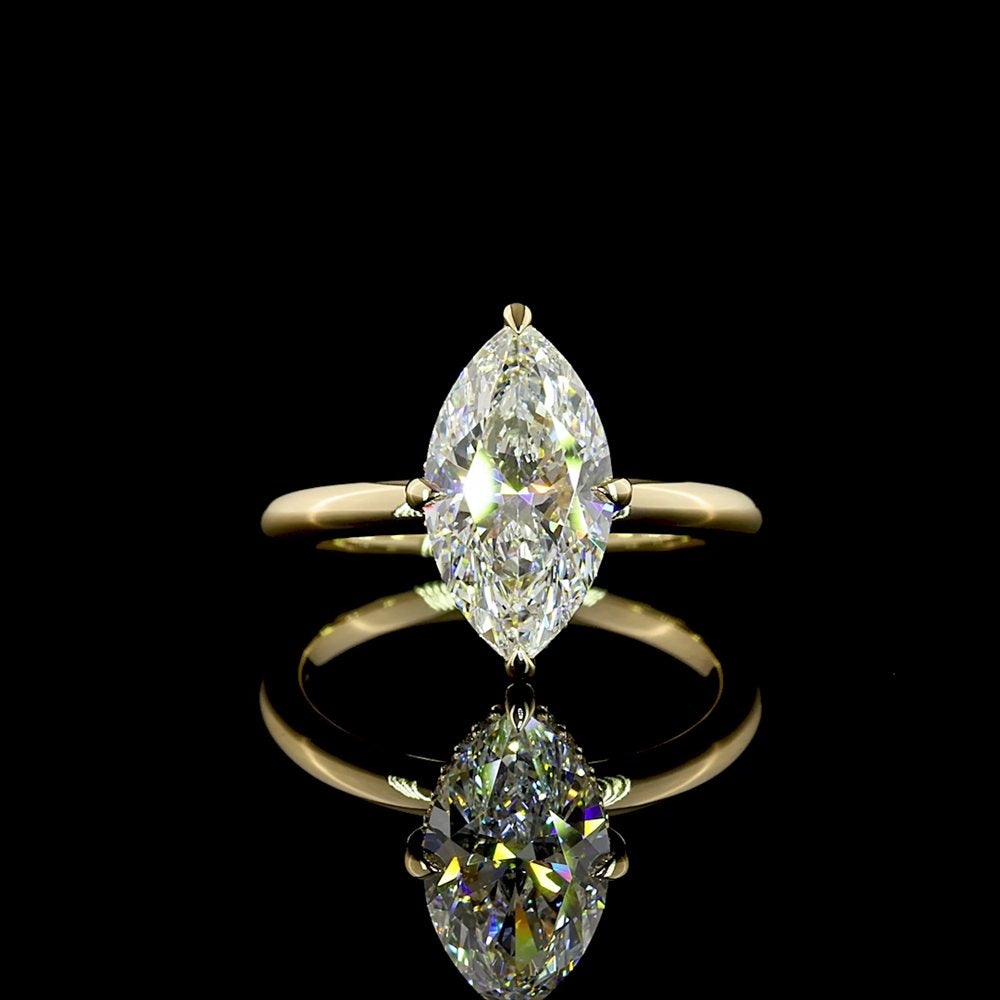
A marquise-cut diamond in a slim yellow gold solitaire setting
Marquise cut · yellow gold solitaire

The marquise

Pointed at both ends, and the champion of looking large — no shape covers more finger per carat. A marquise of the same weight as a round will read noticeably bigger on the hand, which is why it keeps returning to fashion.

Dramatic, unmistakably vintage, and worth setting thoughtfully: both points are vulnerable, so they are nearly always capped with V-tip prongs. Set on a slim band like this one, the stone does all the talking.

In the collection: Marquise Lab Diamond Wavy Solitaire Engagement Ring.

What a cut grade actually measures

On a certificate, the cut grade — Excellent, Very Good, Good, and downward — describes proportion, symmetry, and polish. Two things to know about it.

First, the standardized cut grade exists for round brilliants. Fancy shapes are judged on polish and symmetry rather than an overall cut grade, which means the maker's skill and your own eye matter more. Second, no certificate can tell you how a stone looks in daylight on a hand. That is why we walk through candidate stones with you on video rather than sending a spreadsheet of grades.

Every Reai design can be built around any of these shapes. If you're deciding between two, we'll show you hand-selected stones of each on video — the difference is far easier to see than to describe. Certificates come from IGI on diamonds of one carat and above, with smaller stones certified on request.

Next: choosing a setting — how the ring gets built around the stone.

Still deciding

Find the one that catches you

We'll go through an assortment of hand-selected stones together on video, so you can see the shapes side by side before you decide — private, complimentary, and never rushed.

Book a consultation