Guides

How to Choose an Engagement Ring Setting

The stone gets the attention, but the setting decides how the ring feels — on the hand, in daylight, ten years in. Here is how we walk clients through it.

Start with the life, not the stone

Before any silhouette, we ask one question: what do the hands that will wear this ring do all day? A surgeon, a ceramicist, and a pianist need different rings — not different beauty, different engineering. A ring worn through gardening gloves and gym sessions wants a lower profile and more protected stone than one that comes off at the door. Answer this honestly and half the decision makes itself.

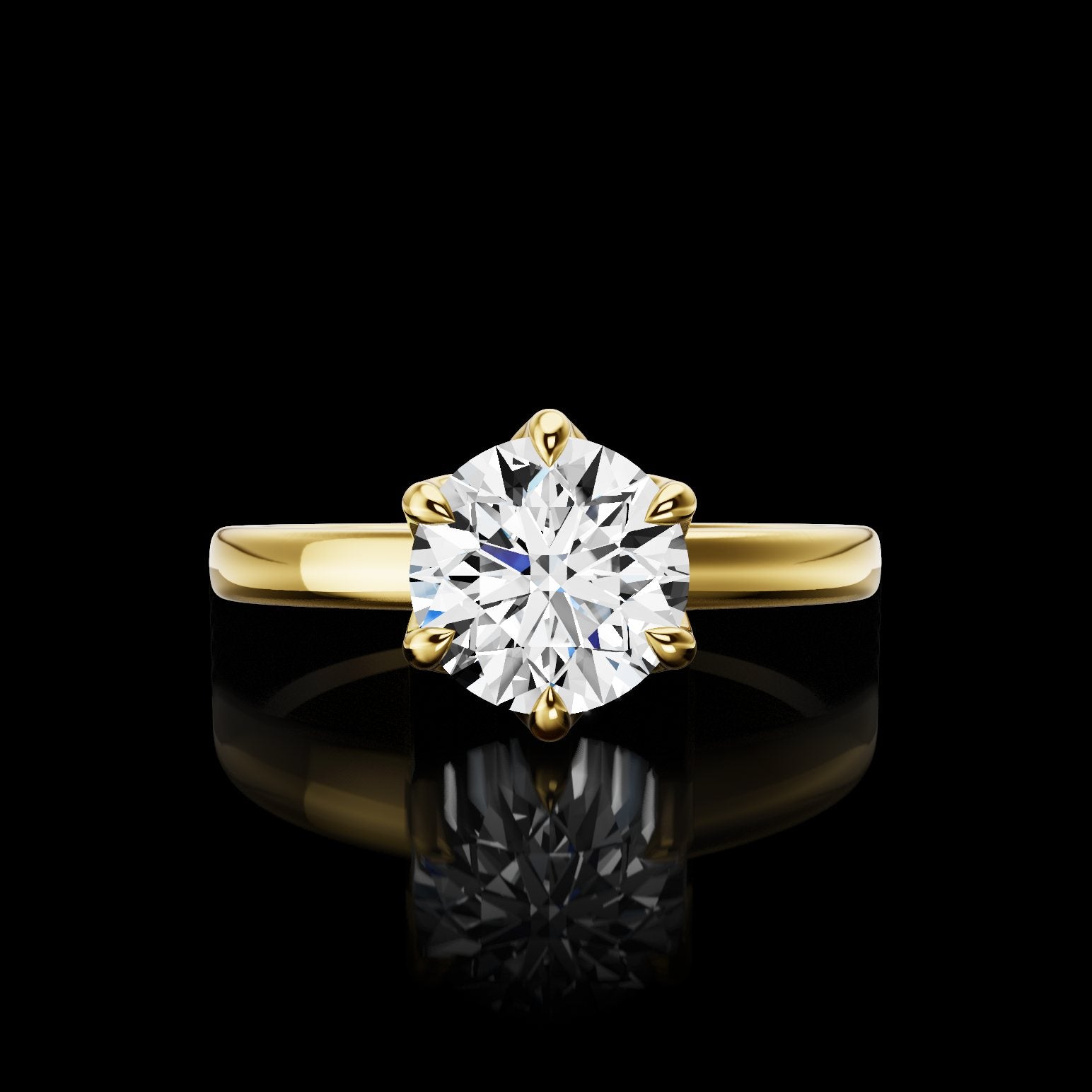
A round brilliant diamond solitaire in a six-prong yellow gold setting
Round brilliant solitaire · yellow gold

The solitaire

One stone, held high. The solitaire is the quietest setting and the hardest to date — it was classic a century ago and will be classic in another. It puts everything on the stone itself, which is why we spend so long on stone selection for solitaires like The Clara. Choose it if you want the ring to whisper, and if the wearer's style leans clean and unfussy.

In the collection: Radiant Lab Diamond Split Shank Solitaire Engagement Ring.
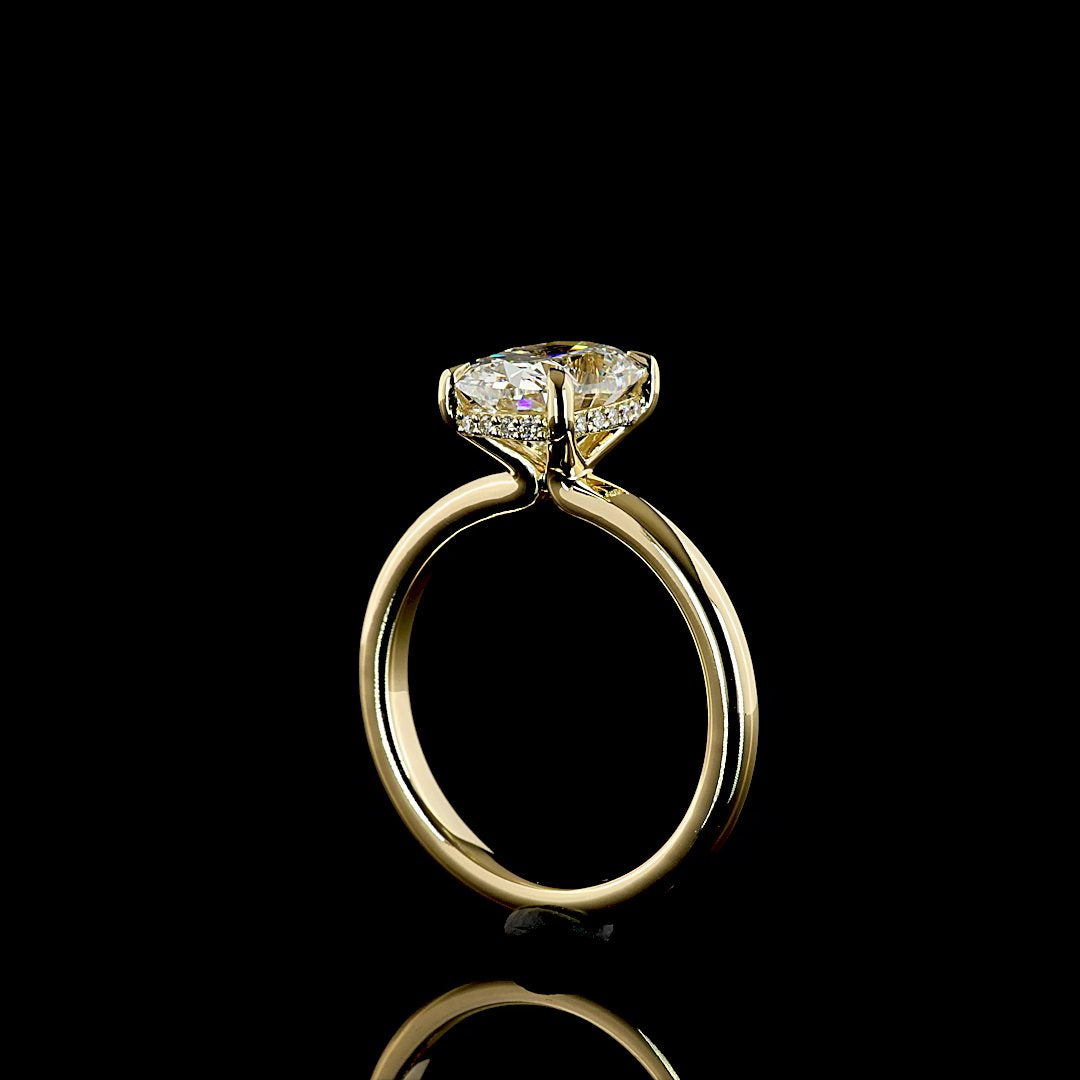
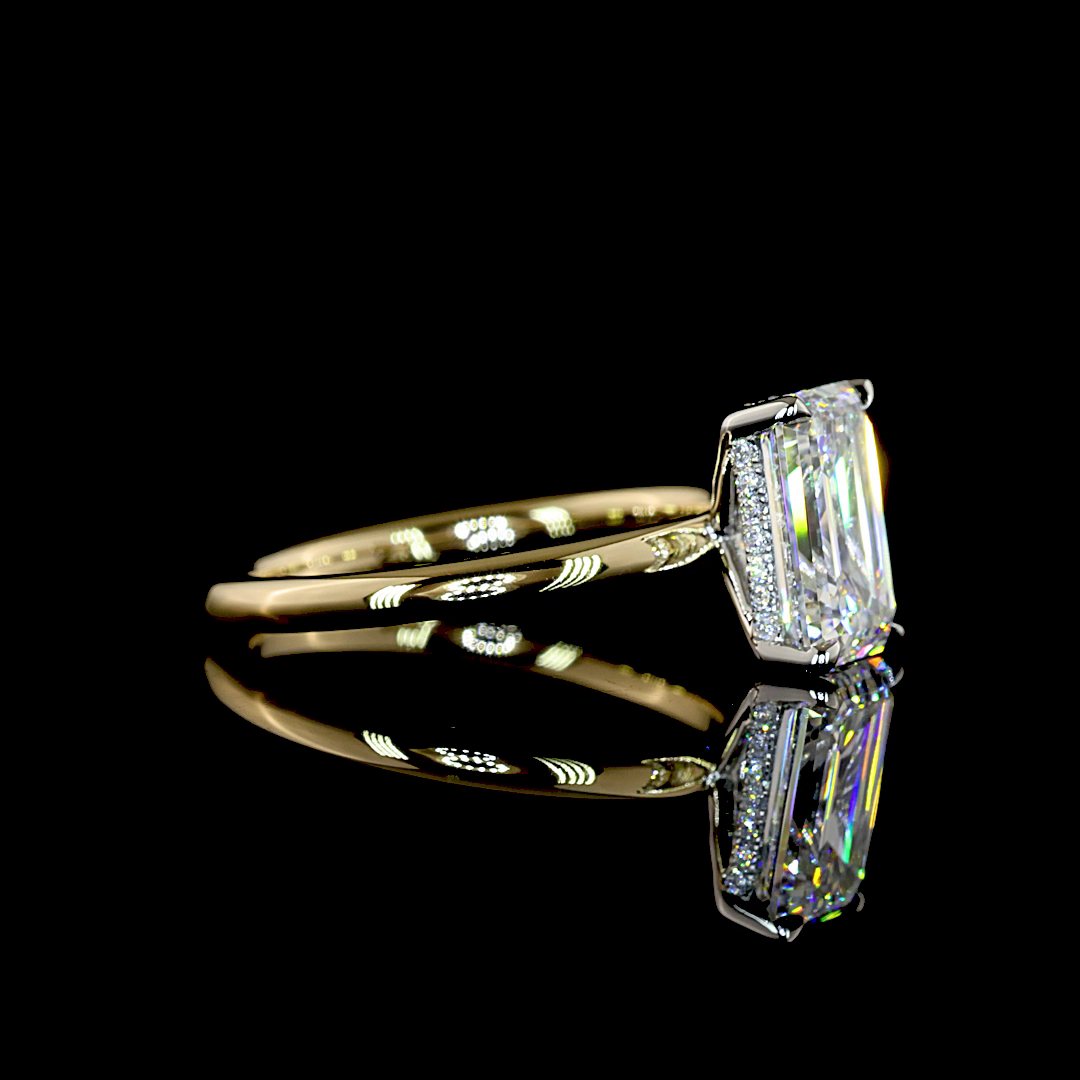
Side profile of a yellow gold ring showing a hidden halo of pavé diamonds beneath the center stone
The hidden halo, seen from the side

The halo

A circle of smaller diamonds around the center stone. A halo adds spread and sparkle — a one-carat center reads visibly larger inside one — and it frames the stone the way a mat frames a print. It suits wearers who love brilliance and detail. The trade: more small stones means a touch more care over a lifetime.

The hidden halo deserves its own mention, because it has become one of the most requested details in modern engagement rings. Here the circle of diamonds sits beneath the center stone rather than around it — invisible from above, glittering from every other angle. From straight on the ring reads as a clean solitaire; the sparkle is a secret the wearer catches all day. It's the best of both silhouettes, which is exactly why it's everywhere right now.

In the collection: Emerald Lab Solitaire with Platinum Band and Hidden Halo.

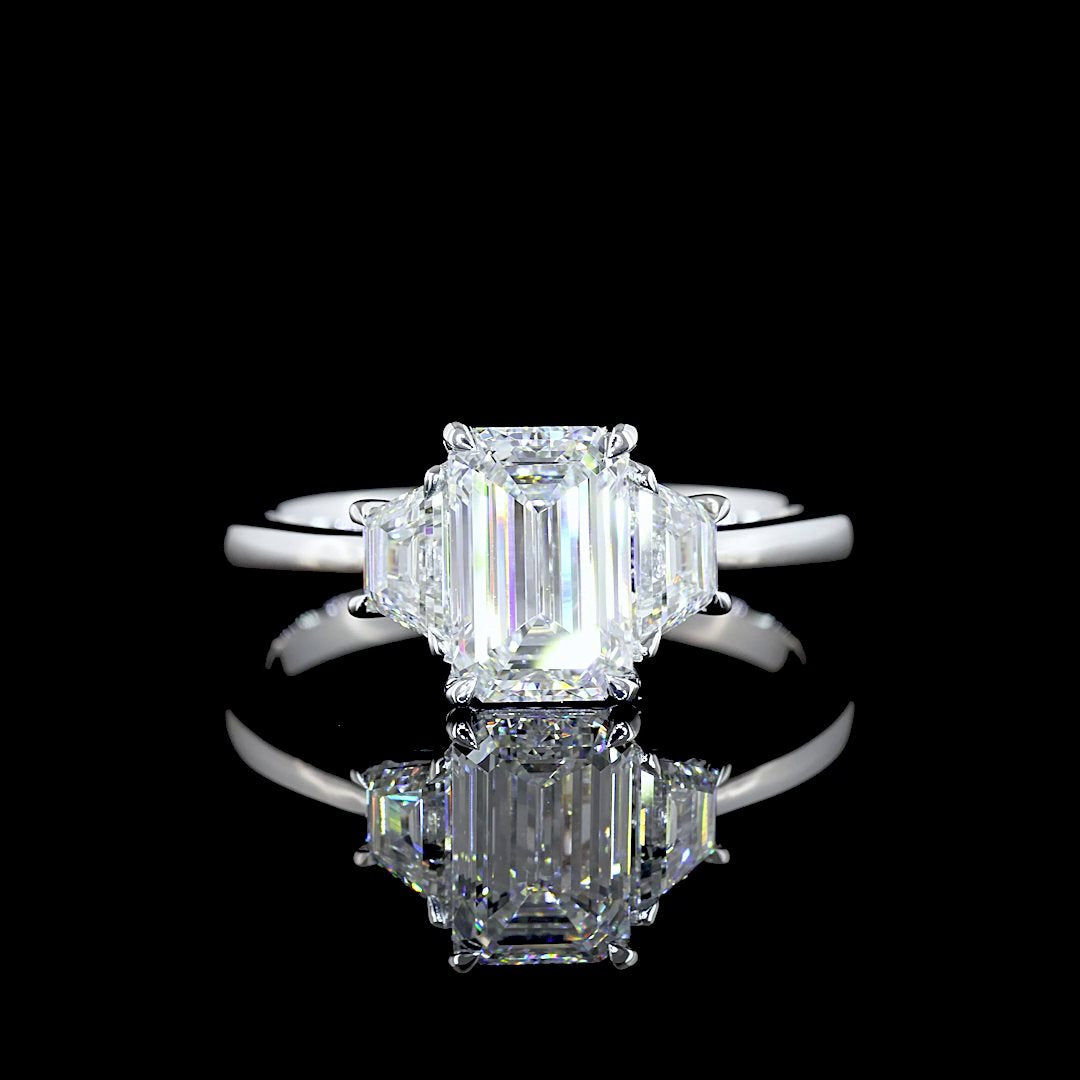
An emerald-cut diamond flanked by two trapezoid side stones in a platinum three-stone ring
Emerald cut with trapezoid sides · platinum

The three-stone

Past, present, and future — the three-stone carries its own story built in. Side stones can echo the center or contrast it. It wears wider on the finger than a solitaire, which flatters longer fingers especially, and it gives a bespoke design room for meaning: a birthstone flank, a stone from a family piece.

In the collection: Emerald Cut 3-Stone Lab Engagement Ring.

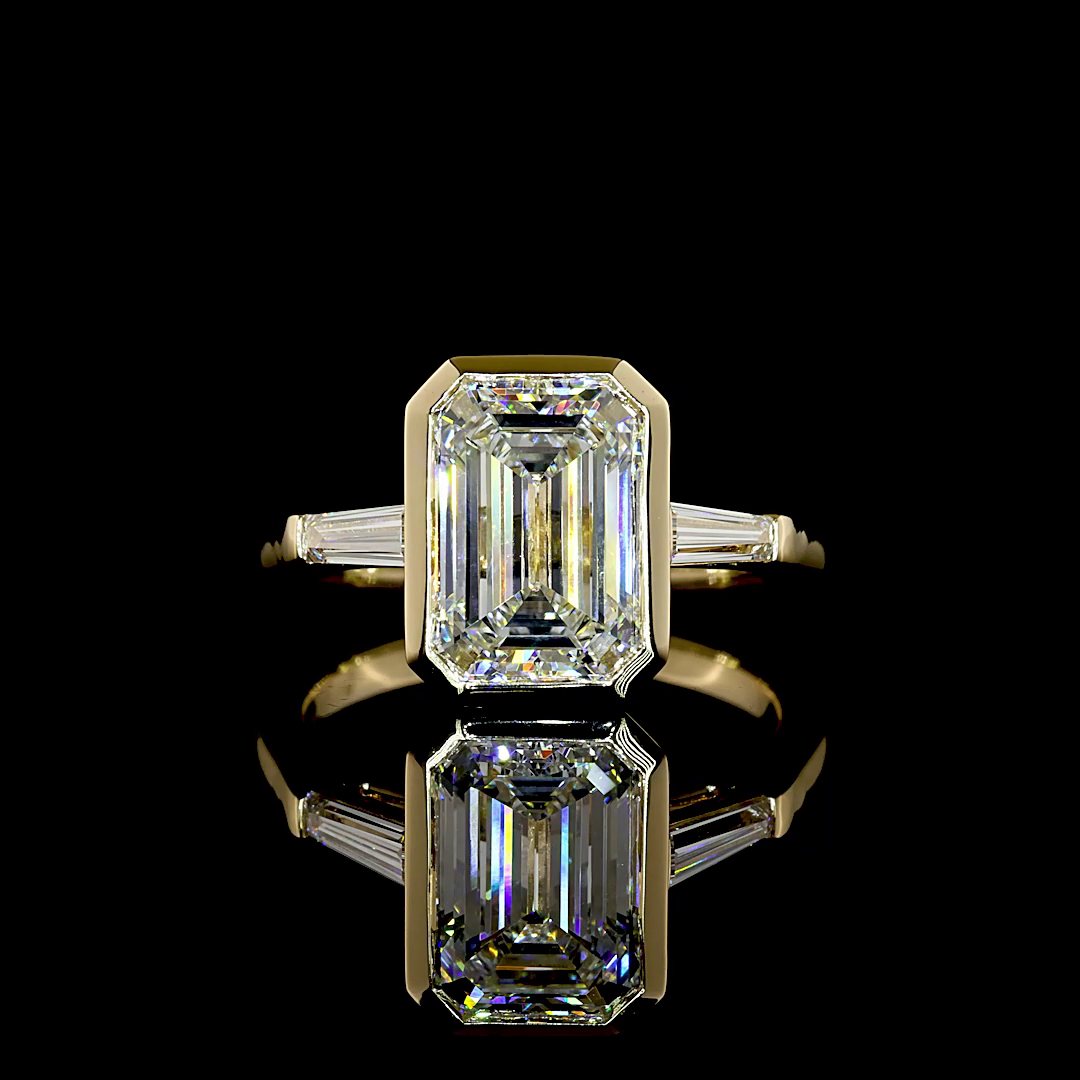
A bezel-set emerald-cut diamond with tapered baguette side stones in yellow gold
Bezel-set emerald cut · yellow gold

The bezel

A thin rim of metal wrapping the stone's edge entirely. The bezel is the most protective setting there is — nothing catches, nothing snags, and the stone is guarded from knocks. Modern, sleek, and the right answer more often than people expect, particularly for hands that work. What you trade is a sliver of light entering the stone from the side.

In the collection: Bezel-Set Emerald Lab Solitaire Ring.

A gold band with a platinum head and hidden halo holding an emerald-cut diamond, seen from the side
Gold band, platinum head · the mix in practice

Metal changes the answer

Every Reai design is made in solid 14K gold, 18K gold, or platinum — yellow, white, or rose — and the choice plays into the setting. Platinum's density suits hard-wearing bezels and solitaires meant for daily wear. Yellow and rose gold warm a stone's appearance; white metals disappear behind it. 14K is harder and a touch more durable day to day; 18K is richer in color. There is no wrong answer, only a right one for the wearer.

And if you're having a hard time deciding: it's also common to mix. A 14K or 18K gold band with a platinum head holding the center stone gives you the warmth of gold on the hand and platinum's maximum security where it matters most. Many of our commissions land exactly there.

In the collection: engagement rings in every metal.

A word on proportion

  • Band width changes everything: a slim band makes any center stone read larger.
  • Profile height decides snag-resistance — low-set stones live more easily under gloves and through daily life.
  • Finger coverage is a taste question, not a rule. Try wide and narrow before deciding.

Unsure between two? That is the most common place to land, and it is exactly what a consultation is for. We will sketch both around your stone before you commit to either.

Next: cut and shape — how the stone itself changes the ring.

Still deciding

Design it around her hand

Every commission begins with a conversation about the person, not the product. Private, complimentary, and never rushed.

Book a consultation